

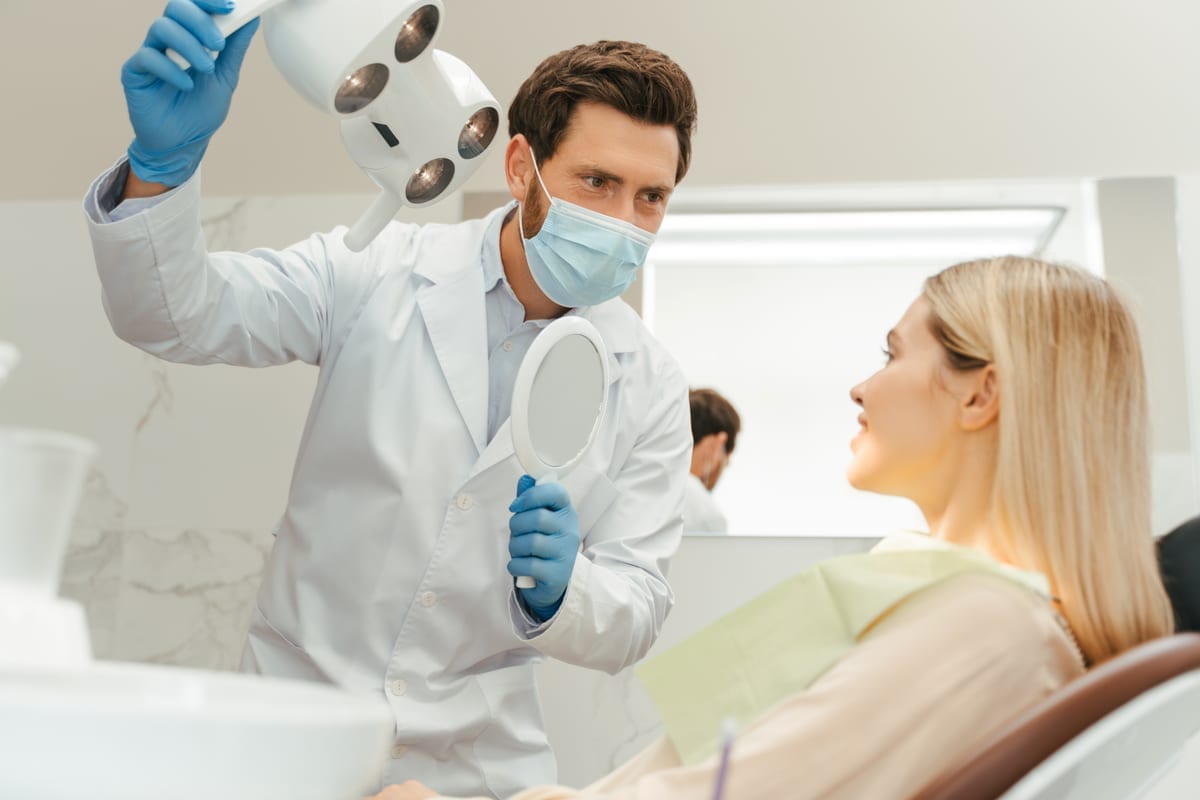
Many Flourtown patients brush twice daily and still leave their dental visit with tartar buildup. If that sounds familiar, you are not doing anything wrong. Understanding why brushing can’t remove hardened tartar — but we can — helps explain what professional cleanings actually accomplish. At The Schiff & Moniz Dental Group, Dr. Jill Moniz helps patients understand the real difference between home care and in-office treatment.
What Is Tartar and How Does It Form in Flourtown Patients?
Tartar starts as plaque — a soft, sticky film of bacteria that forms on your teeth every single day. Plaque is removable at home with regular brushing and flossing. The problem begins when plaque stays on the tooth surface for 24 to 72 hours without removal.
During that window, minerals from your saliva bind with the plaque. This process hardens it into a substance called tartar, also known as dental calculus. Once tartar forms, it bonds to tooth enamel and cannot be brushed away.
Tartar can develop both above and below the gumline. Subgingival tartar — the kind below the gums — is especially damaging and completely invisible to the naked eye. This is one major reason why professional care is essential, not optional.
Why Brushing Can’t Remove Hardened Tartar No Matter How Hard You Try
Toothbrush bristles are designed to remove soft plaque and food debris. They simply do not have the mechanical force or the correct tools to break apart calcified deposits. Even electric toothbrushes cannot dislodge hardened tartar.
Think of tartar like cement on a tile floor. A sponge can clean fresh spills with ease. But once that cement dries and hardens, a sponge does nothing. You need a specialized tool to chip it away safely.
The same logic applies to your teeth. No amount of brushing pressure or toothpaste formulation changes this fact. Abrasive toothpastes marketed for tartar control can slow buildup — but they cannot reverse it once calcification occurs.
Here are some common myths patients in Flourtown believe about home tartar removal:
- Brushing harder will scrape tartar off — it will not, and it damages enamel
- Whitening toothpaste removes tartar — it only addresses surface stains
- Oil pulling dissolves tartar — there is no scientific evidence for this claim
- Flossing can dislodge calculus — floss removes plaque, not hardened deposits
What a Professional Cleaning Actually Removes That You Cannot
When Dr. Jill Moniz or a dental hygienist performs a professional cleaning, they use specialized instruments called scalers and curettes. These tools are designed to safely break apart and lift tartar from tooth surfaces. Ultrasonic scalers use vibrations and a water stream to loosen large deposits efficiently.
A professional cleaning removes much more than just tartar. Here is what gets addressed during your appointment at The Schiff & Moniz Dental Group:
- Supragingival tartar above the gumline
- Subgingival tartar hidden beneath the gums
- Surface stains that accumulate from coffee, tea, and food
- Bacterial biofilm that contributes to gum inflammation
- Plaque from hard-to-reach areas between teeth and near the back molars
After scaling, the hygienist polishes your teeth with a gritty paste called prophylaxis paste. This removes residual surface stains and leaves teeth smooth. A smooth surface makes it harder for new plaque to cling to the enamel.
For patients with significant buildup below the gumline, a deeper procedure called scaling and root planing may be recommended. This targets the roots of the teeth directly and helps the gums reattach to a cleaner surface.
The Real Risks of Skipping Professional Cleanings
Tartar buildup is not just a cosmetic issue. Left untreated, it creates serious health consequences for your teeth and gums. The bacteria trapped in tartar produce acids and toxins that irritate gum tissue constantly.
Over time, this leads to gingivitis — the early stage of gum disease. Gingivitis causes redness, swelling, and bleeding during brushing. Most patients in Flourtown do not realize these are warning signs, not just sensitivity.
If gingivitis goes untreated, it progresses to periodontitis. At this stage, the infection destroys the bone and connective tissue that hold your teeth in place. Tooth loss becomes a real risk — and the treatment becomes far more involved.
Severe gum disease can also lead to dental emergencies that require immediate attention. If you ever experience sudden pain, swelling, or bleeding, reaching out for Emergency Dentistry support is the right first step.
Beyond gum disease, tartar buildup contributes to bad breath, enamel erosion, and cavities that form at the base of calculus deposits. Regular cleanings interrupt this entire chain of events before it starts.
How Often Should Flourtown Patients Schedule Professional Cleanings?
Most patients benefit from a professional cleaning every six months. This interval prevents tartar from accumulating to levels that cause gum inflammation or damage. However, some patients need more frequent visits.
Patients with a history of gum disease, dry mouth, or heavy tartar buildup may need cleanings every three to four months. Dr. Jill Moniz evaluates each patient individually and recommends the schedule that fits your specific needs.
Children and adults both benefit from routine cleanings. Tartar forms at any age, and establishing consistent habits early prevents major issues later in life. Combining cleanings with good home care creates the best long-term outcomes.
If you are also interested in improving the appearance of your smile alongside your oral health, our team offers a full range of options through Cosmetic Dentistry services designed to complement your healthy foundation.
Conclusion: Home Care and Professional Care Work Together
Daily brushing and flossing are essential habits — and they prevent plaque from becoming tartar in the first place. But once tartar hardens, only a trained dental professional with the right instruments can safely remove it. The two approaches are partners, not substitutes for each other.
At The Schiff & Moniz Dental Group in Erdenheim, PA, Dr. Jill Moniz and her team are committed to giving Flourtown patients the thorough, personalized care that home routines simply cannot replace. Protecting your oral health is a team effort — and we are proud to be your partner in that process. Book Now to schedule your appointment with our team.
Frequently Asked Questions
Can tartar go away on its own without a dentist?
No, tartar cannot dissolve or disappear on its own. Once plaque mineralizes into tartar, only a dental professional using specialized instruments can safely remove it. Waiting allows buildup to worsen and increases the risk of gum disease.
Does tartar buildup mean I am not brushing properly?
Not necessarily. Some patients produce more tartar-forming minerals in their saliva than others. Even people with excellent brushing habits can develop tartar quickly. Regular professional cleanings compensate for this natural variation.
Is tartar removal painful?
Most patients find routine tartar removal comfortable, especially when cleanings happen every six months. Patients with significant buildup or sensitive gums may feel some pressure or mild discomfort. Dr. Jill Moniz and her hygienists take care to make the process as gentle as possible.
What does tartar look like on teeth?
Tartar above the gumline often appears as a yellow or brownish crusty deposit near the base of the teeth, especially along the inner lower front teeth. Tartar below the gumline is not visible but can be detected during a professional exam.
How can I slow down tartar buildup between visits?
Brushing twice daily with fluoride toothpaste, flossing once daily, and using an antiseptic mouthwash all help slow plaque formation before it hardens. Staying hydrated, reducing sugary foods, and not smoking also reduce tartar accumulation significantly.