


You notice your gums bleed when you brush. Your breath feels off even after rinsing. Maybe a tooth feels slightly loose, but you tell yourself it will pass. Many people ignore these early signs, assuming they are minor or temporary. The reality is more serious. Gum disease often begins quietly, but it can progress into a condition that threatens the stability of your teeth.
If left untreated, gum infections can damage the tissue and bone that support your teeth. Over time, this can lead to tooth loss. Understanding how this happens helps you take control early. In communities like Erdenheim, where busy routines often push health concerns aside, knowing what to watch for matters.
This guide explains the causes, stages, warning signs, and prevention steps so you can protect your smile before the damage becomes permanent.
What Is Gum Disease and How Does It Start
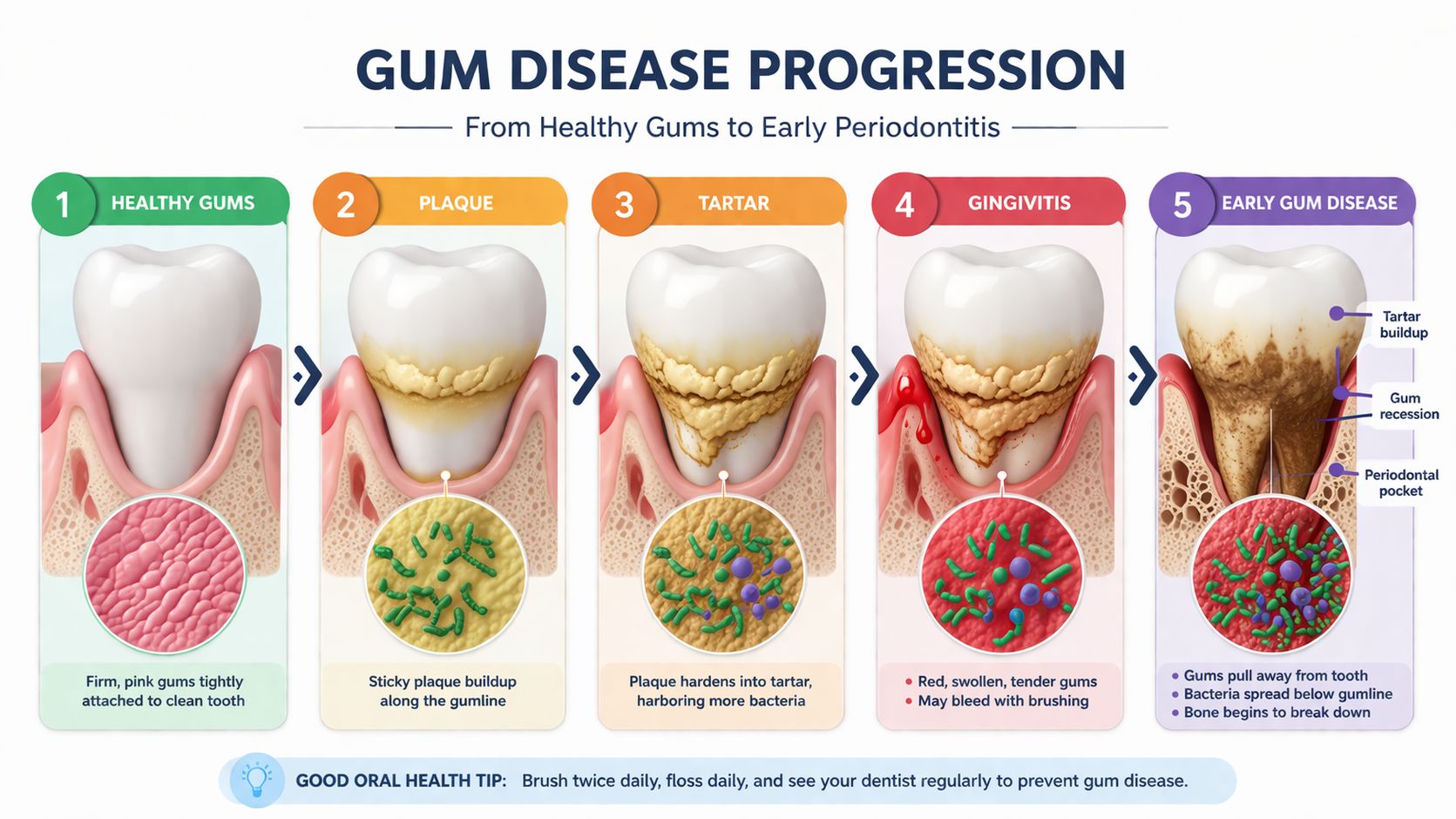
Gum disease is an infection of the tissues that support your teeth. It begins with plaque, a sticky film of bacteria that builds up on teeth throughout the day. When plaque is not removed through proper cleaning, it hardens into tartar and creates an environment where bacteria thrive.
This bacterial buildup irritates the gums. In the early stage, called gingivitis, you may notice redness, swelling, or bleeding during brushing. At this point, the condition is still reversible. However, many people do not feel pain, which makes it easy to overlook.
As plaque continues to accumulate, the bacteria move below the gumline. This leads to deeper infection and inflammation. At The Schiff & Moniz Dental Group, early intervention with gum disease treatment in Erdenheim can help stop this process before it causes long-term damage.
In areas like Erdenheim and nearby neighborhoods such as Chestnut Hill and Flourtown, patients often delay care until symptoms worsen. The key is recognizing that gum disease starts quietly and progresses steadily without proper attention.
How Gum Disease Leads to Tooth Loss
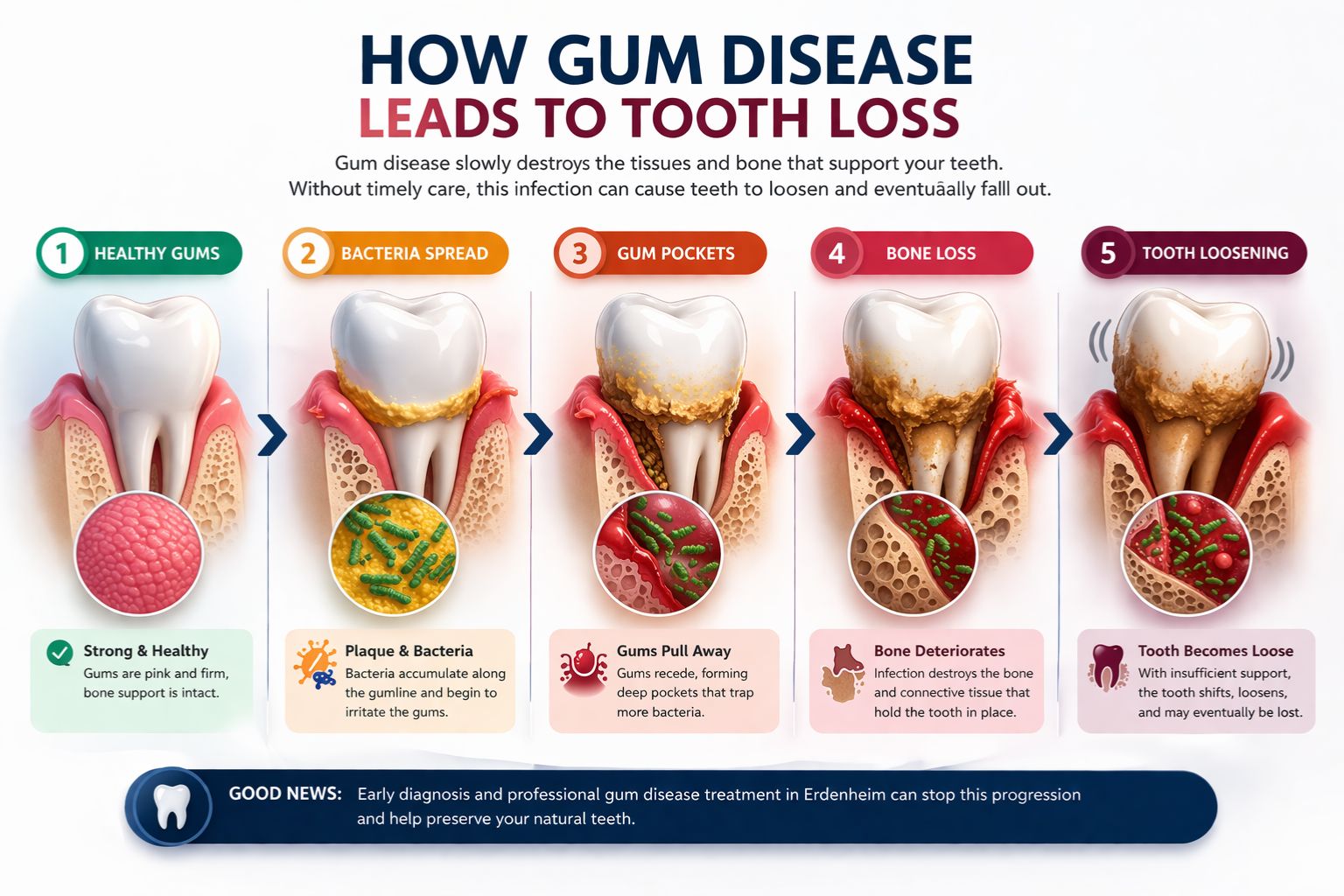
Gum disease does not just affect the surface of your gums. It targets the structures that hold your teeth in place. As bacteria spread beneath the gumline, they begin to break down the connective tissues and bone that support each tooth.
The gums start to pull away, forming pockets that trap more bacteria. These pockets deepen over time, making it harder to clean the area. As the infection progresses, the supporting bone weakens.
Teeth rely on this bone for stability. When it deteriorates, teeth begin to shift or loosen. At first, this may feel subtle, like a slight change in your bite. Over time, the movement becomes more noticeable.
Eventually, the tooth loses enough support that it cannot stay in place. At this stage, tooth loss becomes unavoidable. Patients in Montgomery County often report noticing changes only when chewing becomes uncomfortable or alignment shifts.
Timely care, including gum disease treatment in Erdenheim, can interrupt this progression and preserve the supporting structures before permanent damage occurs.
Stages of Gum Disease You Should Know
Gingivitis
This is the earliest stage. Gums appear red and swollen, and bleeding may occur during brushing or flossing. There is no bone loss at this stage, and the condition can be reversed with proper care.
Early Periodontitis
As the disease progresses, small pockets form between the teeth and gums. Mild bone loss begins. Symptoms may still feel manageable, which is why many patients do not seek care yet.
Moderate Periodontitis
Pocket depth increases, and gum recession becomes more visible. Teeth may begin to feel slightly loose. At this stage, the infection is actively damaging the supporting structures.
Advanced Periodontitis
This is the most severe stage. Significant bone loss occurs, and teeth may shift, loosen, or fall out. Daily activities like chewing become difficult. Treatment becomes more complex, and saving teeth may not always be possible.
Recognizing these stages early helps patients in Erdenheim take action before the condition reaches a critical point.
Warning Signs You Should Not Ignore
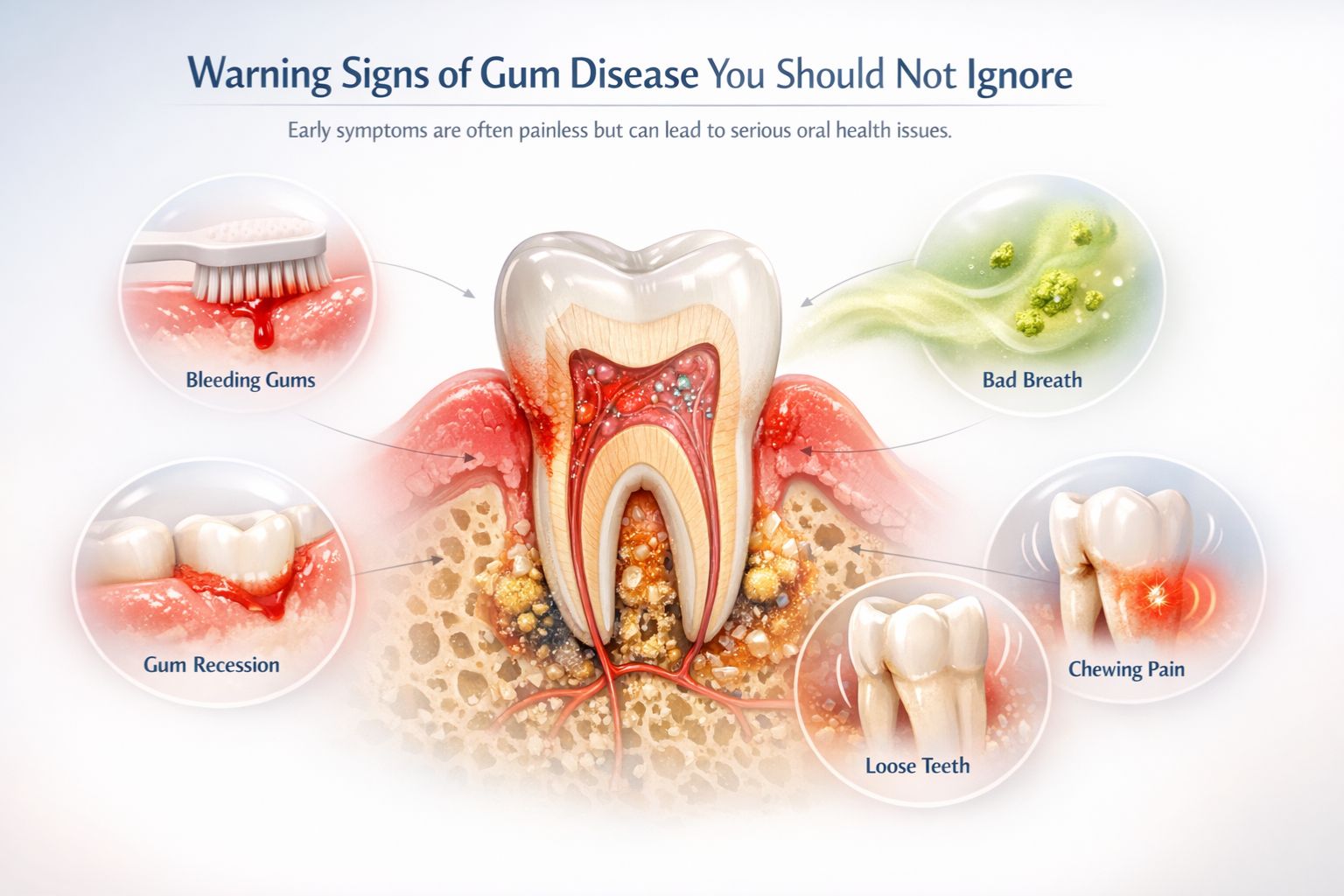
- Bleeding gums during brushing or flossing
- Persistent bad breath that does not improve
- Gum recession or teeth appearing longer
- Loose or shifting teeth
- Pain or discomfort while chewing
These symptoms often develop gradually. Many residents in the Erdenheim area notice mild bleeding first but delay care. Paying attention to these early signs allows for simpler and more effective treatment.
Who Is at Higher Risk for Tooth Loss from Gum Disease
Certain factors increase your risk of developing advanced gum disease and losing teeth.
Smoking and tobacco use reduce blood flow to the gums, making it harder for tissue to heal. Diabetes also plays a role, as it affects the body’s ability to fight infection. Poor oral hygiene allows plaque to build up quickly, increasing bacterial activity.
Genetics can influence how your body responds to bacteria. Some people develop severe gum issues even with moderate plaque buildup. Age is another factor. As people get older, the risk of gum disease increases due to cumulative exposure and slower healing.
In areas like Wyndmoor and Lafayette Hill, patients with demanding schedules often skip routine visits, which adds to the risk. Understanding these factors helps you take preventive steps early.
Can Tooth Loss Be Prevented If You Have Gum Disease
Yes, tooth loss can often be prevented if gum disease is treated early. The key is stopping the infection before it damages the bone and supporting tissues.
Professional care plays a critical role. Regular exams allow early detection of gum changes that may not be visible at home. In-office treatments remove bacteria from below the gumline, where regular brushing cannot reach.
Consistent home care supports these efforts. Brushing, flossing, and maintaining a clean oral environment reduce bacterial buildup between visits.
At The Schiff & Moniz Dental Group, patients receive guidance tailored to their condition. Early action not only protects your teeth but also simplifies treatment and recovery.
Treatment Options That Help Save Your Teeth
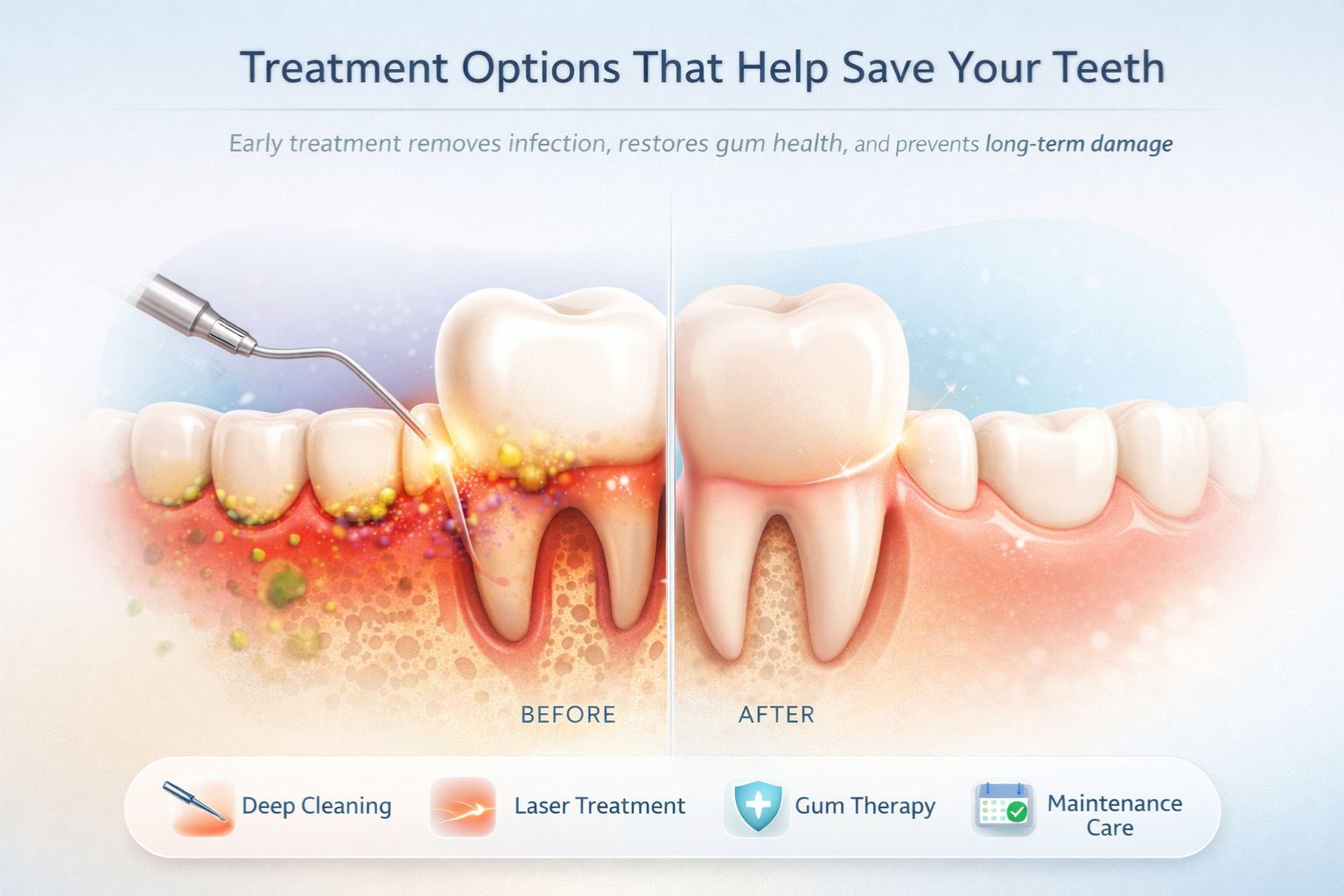
Treatment depends on how advanced the condition is. The goal is always the same: remove infection, reduce inflammation, and protect the supporting structures.
Deep cleaning, also known as scaling and root planing, removes plaque and tartar from below the gumline. This helps the gums reattach to the teeth.
Gum therapy procedures may be recommended for more advanced cases. These treatments target infected areas and promote healing.
Laser-based approaches may also be used, depending on the condition. These methods focus on precision and minimizing damage to healthy tissue.
Ongoing maintenance visits are essential. Once gum disease is controlled, regular follow-ups help prevent it from returning.
Patients in the Erdenheim area benefit from consistent monitoring and care, which supports long-term stability and reduces the risk of future complications.
What Happens If Gum Disease Is Left Untreated
When gum disease is ignored, the damage continues to spread. Bone loss becomes more severe, and teeth lose their support.
Loose teeth can affect how you chew and speak. You may avoid certain foods or feel discomfort during meals. Over time, missing teeth can impact your confidence and facial structure.
The effects are not limited to your mouth. Gum infections have been linked to broader health concerns, including heart conditions and complications related to diabetes.
In active communities like those around Germantown Avenue, delaying care can lead to more complex treatment needs later. Addressing the issue early prevents these outcomes.
Daily Habits That Protect Your Gums and Teeth
- Brush your teeth twice a day using proper technique
- Floss daily to remove plaque between teeth
- Schedule routine dental visits for professional cleanings
- Choose a balanced diet that supports oral health
Simple habits create a strong foundation for long-term gum health. Consistency matters more than intensity. Small daily actions help prevent larger problems.
When You Should See a Dental Professional
If your gums bleed regularly, it is time to get them evaluated. Loose teeth should never be ignored, even if the movement feels minor.
Gum recession, persistent bad breath, or discomfort while chewing are also signs that require attention. These symptoms often indicate an underlying infection.
Residents in Erdenheim often wait until symptoms become severe. Early visits allow for simpler care and better outcomes.
Gum disease is common, but it is also manageable when addressed early. Ignoring the signs allows the condition to progress, putting your teeth and overall health at risk. Taking action now helps preserve your natural teeth and avoid complex treatments later.
At The Schiff & Moniz Dental Group, patients receive focused care designed to protect long-term oral health. If you have noticed any warning signs or want to stay ahead of potential issues, scheduling an evaluation is the next step. A timely visit can help restore stability, improve comfort, and keep your smile intact for years to come.
People Also Ask
How long does it take for gum disease to cause tooth loss?
The timeline varies depending on severity and care. Some cases progress slowly over years, while others worsen faster without proper attention.
Does gum disease cause pain before tooth loss?
Not always. Many people experience little to no pain in the early stages, which is why the condition often goes unnoticed.
Is gum disease more common as you get older?
Yes, risk increases with age due to longer exposure to plaque and slower healing. Regular care helps reduce this risk.
What does early gum disease feel like?
Early stages often feel mild or go unnoticed. You may notice slight bleeding, redness, or gum tenderness without significant pain.
Are receding gums a sign of tooth loss risk?
Yes, gum recession exposes more of the tooth and weakens support. It can increase the risk of loosening and eventual tooth loss.