

Losing a tooth changes more than your smile. It affects how you eat, speak, and feel each day. If you’re weighing dental implants vs. dentures in Chestnut Hill, you’re asking the right question. Understanding which option really fits your life makes all the difference in long-term satisfaction.
At The Schiff & Moniz Dental Group in Erdenheim, PA, Dr. Jill Moniz helps patients from Chestnut Hill navigate this exact decision every week. This article breaks down both options clearly and honestly — so you can make a confident, informed choice.
Understanding Your Two Main Options: Implants and Dentures
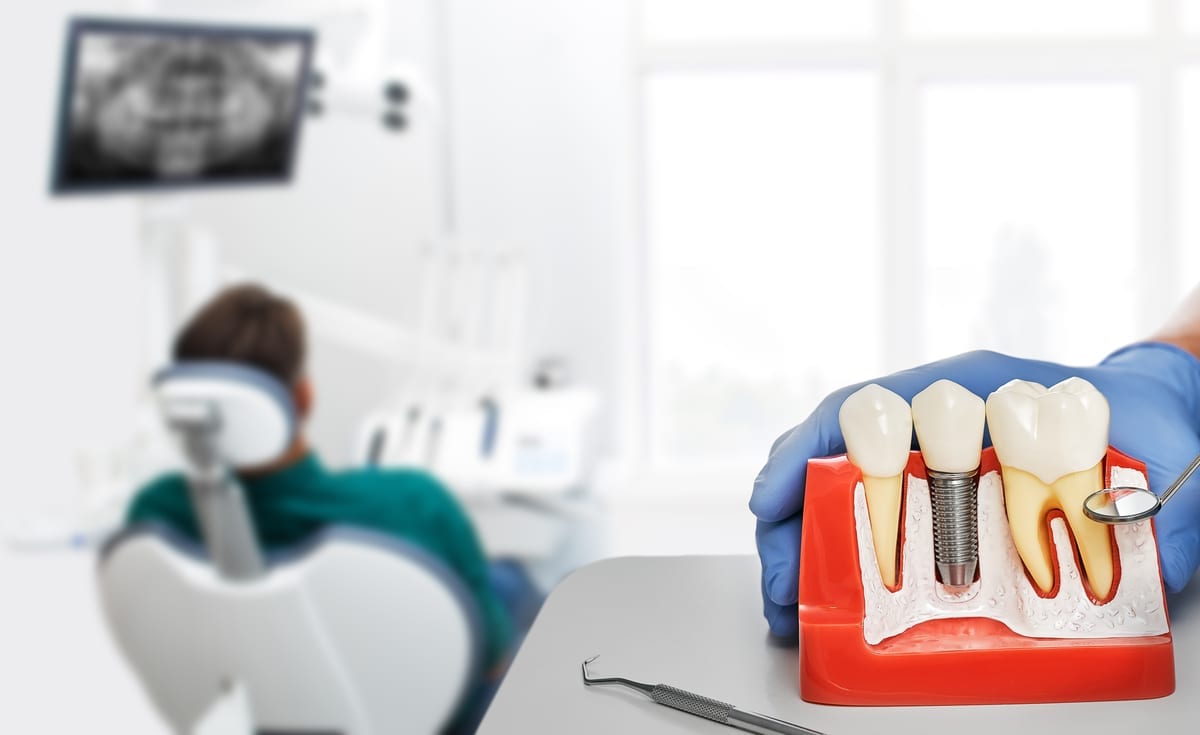
Dental implants are titanium posts surgically placed into the jawbone. They act as artificial tooth roots. A custom crown attaches on top, creating a replacement tooth that looks and functions naturally.
Dentures are removable appliances that replace multiple — or all — missing teeth. Traditional dentures rest on the gums. They can be full (replacing all teeth) or partial (filling gaps between remaining teeth).
Both options restore function and appearance. However, they work very differently inside your mouth. Your bone health, lifestyle, and personal goals all play a role in determining the better fit.
There is also a third option worth mentioning: dental bridges. A bridge fills a gap by anchoring a false tooth to two neighboring crowns. We’ll touch on bridges as part of this comparison throughout the article.
Dental Implants vs. Dentures: The Key Differences That Matter
The most important difference is permanence. Implants fuse to your jawbone through a process called osseointegration. Once healed, they stay fixed in your mouth. Dentures, by contrast, are removed daily for cleaning and soaking.
Bone health is another major factor. When you lose a tooth, the jawbone beneath it begins to shrink. Implants stimulate the bone, just like natural tooth roots do. Dentures do not — meaning bone loss continues over time.
Here are some key differences at a glance:
- Stability: Implants are fixed; dentures may shift while eating or speaking
- Bone preservation: Implants protect the jawbone; dentures do not
- Maintenance: Implants are brushed like natural teeth; dentures require nightly removal
- Lifespan: Implants can last decades; dentures typically need replacement every 5–10 years
- Feel: Implants feel like natural teeth; dentures may feel bulky at first
Neither option is universally better. The right choice depends on your specific situation and what matters most to you day to day.
Who Is a Good Candidate for Dental Implants in Chestnut Hill?
Dental implants work best for patients with healthy, sufficient jawbone density. You also need healthy gums and good overall oral health. Certain conditions like uncontrolled diabetes or active gum disease may need to be addressed first.
Implants are ideal if you want a long-term, low-maintenance solution. They suit patients who are missing one tooth, a few teeth, or even all their teeth (using implant-supported dentures). Age is rarely a disqualifying factor.
As part of our Cosmetic Dentistry services, Dr. Moniz evaluates each patient individually. A cone-beam CT scan helps assess bone volume and implant placement options. Not everyone qualifies right away — but many patients become candidates after preparatory treatment.
If you’ve had dentures for years, you may have experienced bone loss that affects implant eligibility. That said, bone grafting procedures can often restore enough volume to place implants successfully.
When Dentures Make More Sense for Your Lifestyle
Dentures remain a practical option for many patients. They typically involve a shorter treatment timeline than implants. The process doesn’t require surgery, which appeals to patients who prefer to avoid a surgical procedure.
Dentures are also a reasonable choice when significant bone loss has already occurred. In some cases, patients are not medically suitable for surgery. Dentures provide a functional, affordable path to restored chewing and aesthetics.
Here are situations where dentures may be the better fit:
- You need teeth replaced quickly with minimal recovery time
- You are replacing a full arch of missing teeth on a tighter timeline
- Surgical procedures are not recommended due to health conditions
- You want the flexibility to adjust the appliance if your mouth changes
Modern dentures have improved significantly. Implant-supported dentures offer a middle ground — they snap onto implants for stability but are still removable. This hybrid option gives many patients the best of both worlds.
How Bridges Compare — and When They’re Worth Considering
A dental bridge fills a single gap or a small space between teeth. It works well when you have strong, healthy teeth on both sides of the gap. Those neighboring teeth serve as anchors for the bridge.
Bridges are less invasive than implants and faster to complete. However, they require shaving down the adjacent healthy teeth to fit the crowns. This permanently alters those teeth — an important trade-off to consider.
Like dentures, bridges do not prevent jawbone loss beneath the missing tooth. If that gap is left untreated long-term, the bone slowly recedes. Implants remain the only option that addresses bone preservation directly.
If you ever experience a dental emergency related to a failed bridge or damaged tooth, our Emergency Dentistry team is here to help. Prompt care prevents further complications and keeps your options open.
Making the Decision: A Simple Framework for Chestnut Hill Patients
When patients ask Dr. Moniz which option is right for them, she starts with four questions. These questions guide the conversation without making assumptions about what each patient values most.
Ask yourself:
- How many teeth are missing? One tooth favors an implant or bridge. Many missing teeth may point toward dentures or implant-supported dentures.
- How is my bone health? Sufficient bone density supports implants. Significant bone loss may require grafting or make dentures the more practical route.
- What is my lifestyle like? Active patients who want to eat freely and forget about their teeth often prefer implants. Others value the flexibility of removable dentures.
- What are my long-term goals? Implants are an investment with lasting benefits. Dentures offer a reliable, lower-commitment starting point.
There is no single right answer. The best decision is the one that aligns with your health, your habits, and your goals. A thorough consultation with Dr. Moniz brings clarity to that decision quickly.
Conclusion: Your Smile Decision Starts with a Conversation
Choosing between dental implants and dentures is a deeply personal decision. Both options restore your smile and your ability to eat comfortably. The difference lies in how each option fits into your daily life, your bone health, and your long-term expectations.
Patients in Chestnut Hill deserve clear, honest guidance — not a sales pitch. At The Schiff & Moniz Dental Group, Dr. Jill Moniz walks you through every option with patience and expertise. You’ll leave your consultation with a plan that makes sense for you specifically.
Ready to take the next step toward restoring your smile? Book Now to schedule your appointment with our team.
Frequently Asked Questions
How long do dental implants last compared to dentures?
Dental implants can last 20 years or longer with proper care — and in many cases, a lifetime. Dentures typically need to be replaced every 5 to 10 years as the shape of your mouth changes over time.
Are dental implants painful to get?
Most patients report that the implant procedure is more comfortable than they expected. Local anesthesia is used during placement, and any post-procedure discomfort is usually manageable with over-the-counter pain relief. Dr. Moniz discusses what to expect at every stage before treatment begins.
Can I get dental implants if I’ve worn dentures for years?
Possibly, yes. Long-term denture wearers often experience bone loss in the jaw. A bone grafting procedure may be needed to restore enough volume for implants. Dr. Moniz evaluates each case individually using detailed imaging to determine your options.
What is an implant-supported denture?
An implant-supported denture combines both treatments. Several implants are placed in the jaw, and a removable denture snaps securely onto them. This provides much greater stability than traditional dentures while still allowing the appliance to be removed for cleaning.
How do I know which option is right for me in Chestnut Hill?
The best way to find out is through a personalized consultation with Dr. Jill Moniz at The Schiff & Moniz Dental Group. She reviews your oral health, bone density, and personal preferences to recommend the option that truly fits your life.