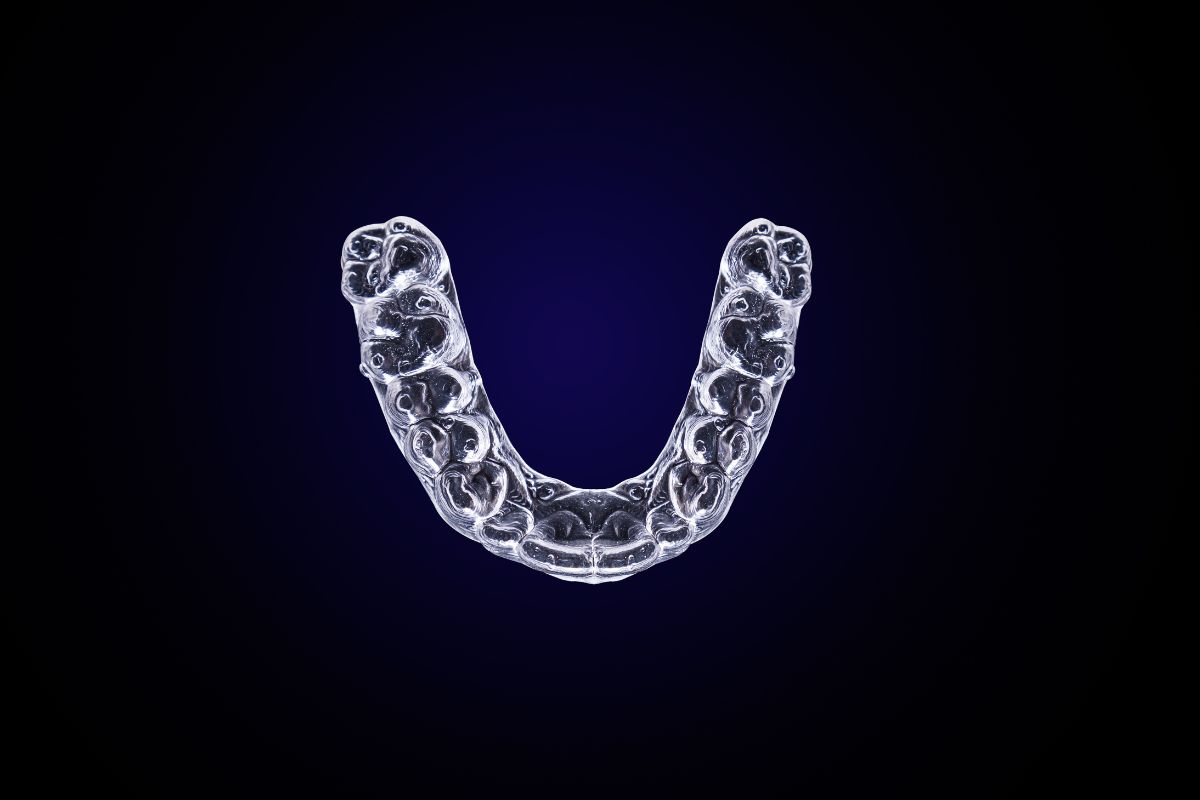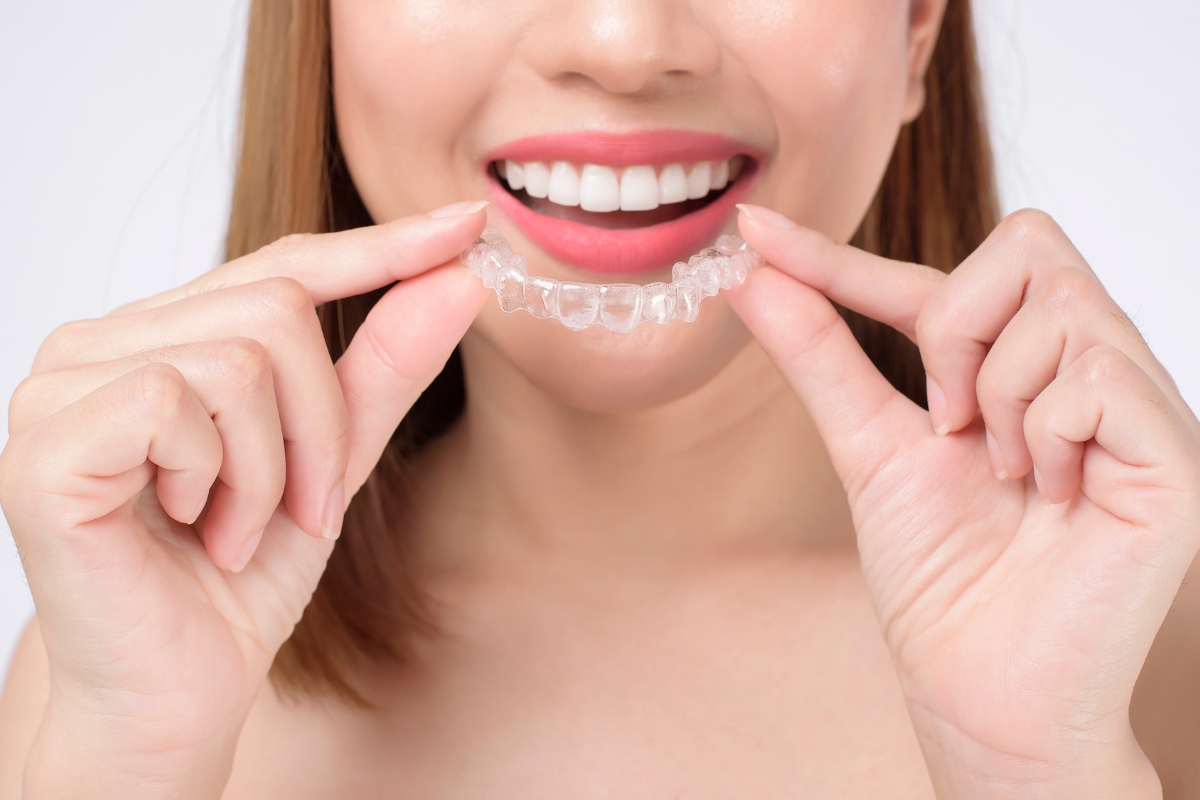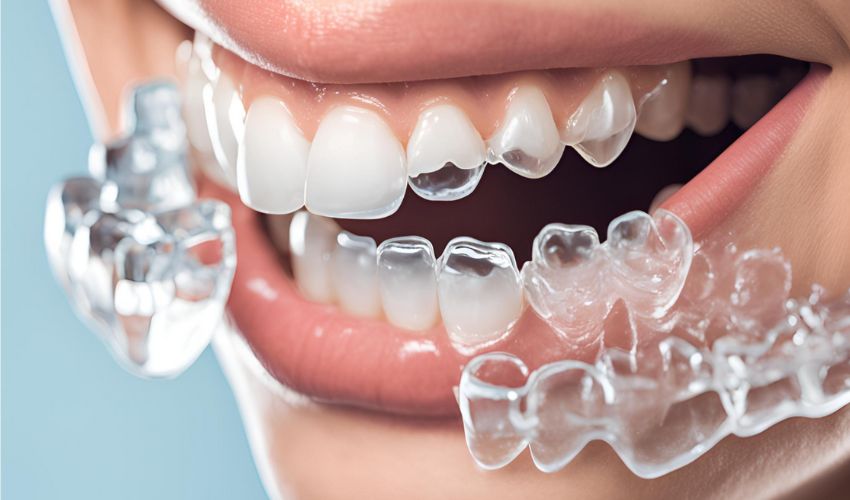

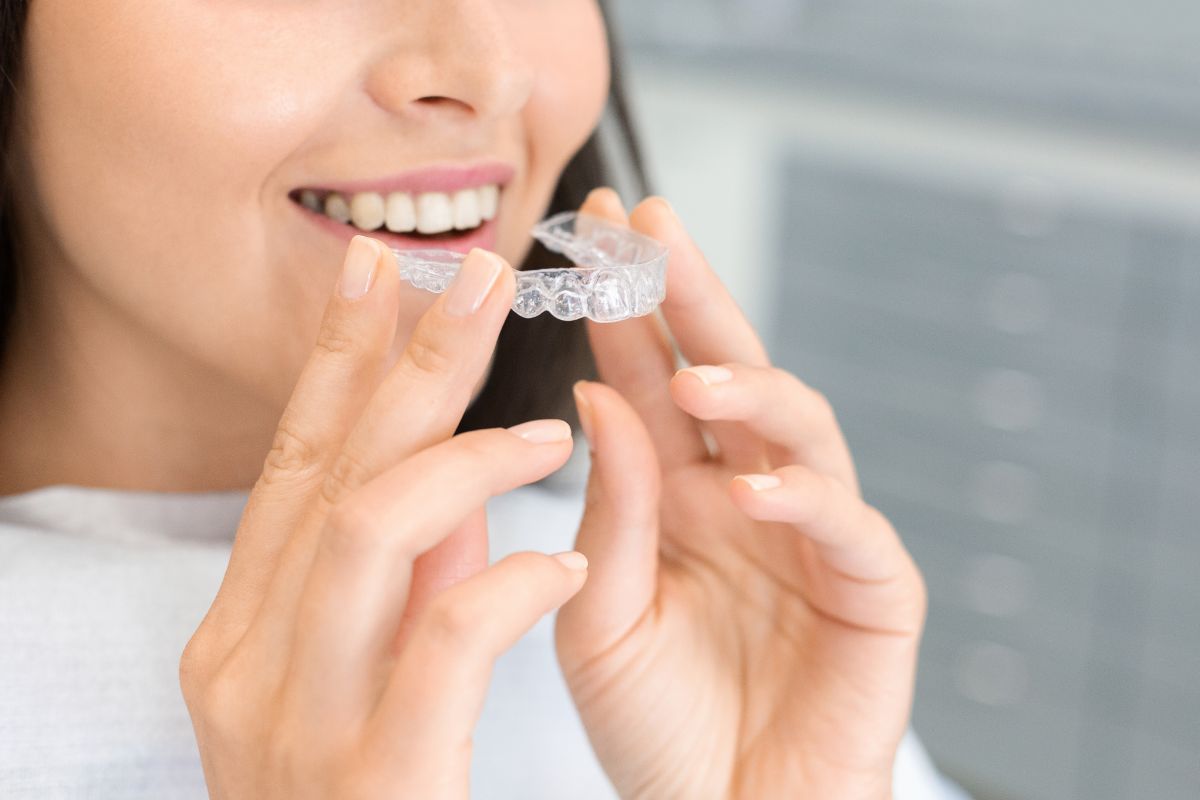
A straight smile can change how you speak, eat, and show up in everyday life. Yet many adults and teens hesitate when they think about orthodontic treatment. Traditional braces are effective, but they are not always the first choice for people who want a low-profile option that fits into work, school, and social routines.
Clear aligners have reshaped how alignment is approached today. They are discreet, removable, and built around your lifestyle. However, this option is not suitable for everyone. Understanding whether this option fits your needs begins with knowing how your teeth, habits, and oral health all play a role in the outcome.
Why Choosing the Right Candidate Matters
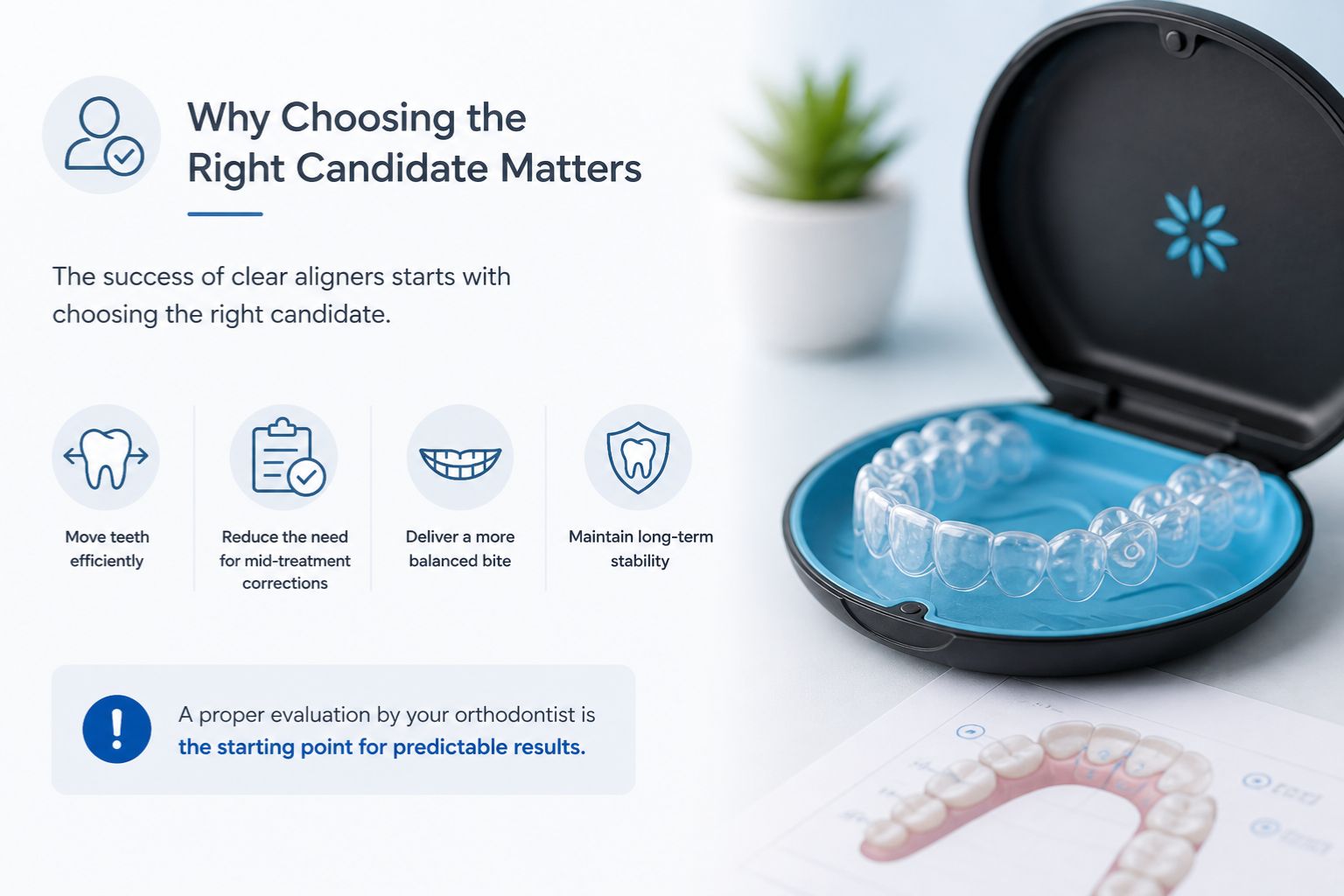
Orthodontic treatment is not one-size-fits-all. The success of clear aligners depends on proper case selection and careful planning by an orthodontist. That is why candidacy is not just about wanting straighter teeth; it is about whether your teeth can move predictably using aligner technology.
For patients considering Invisalign in Erdenheim, it helps to understand that results depend on several clinical factors. The orthodontist evaluates tooth position, bite alignment, gum health, and jaw structure before recommending a treatment path.
When candidacy is assessed correctly, treatment tends to:
- Move teeth efficiently
- Reduce the need for mid-treatment corrections
- Deliver a more balanced bite
- Maintain long-term stability
Skipping this step can lead to delays or unsatisfactory results. That is why a proper evaluation is the starting point.
What Dental Conditions Work Well with Aligners?
Clear aligners are highly effective for many common alignment concerns. Mild-to-moderate cases respond especially well because the trays can gradually guide teeth into position with controlled force.
You could be a suitable candidate if you have:
- Mild to moderate crowding
- Small gaps between teeth
- Slightly crooked teeth
- Minor bite issues such as overbite, underbite, or crossbite
- Relapse after previous orthodontic treatment
These conditions are predictable and can be treated with aligners when guided by an orthodontist. Each aligner is designed from digital scans, enabling step-by-step movement that fits your dental structure.
However, more complex cases, such as severe bite problems or large rotations, may require alternative or combined approaches. That decision is made during your consultation.
Why Taking Care of Your Mouth Matters
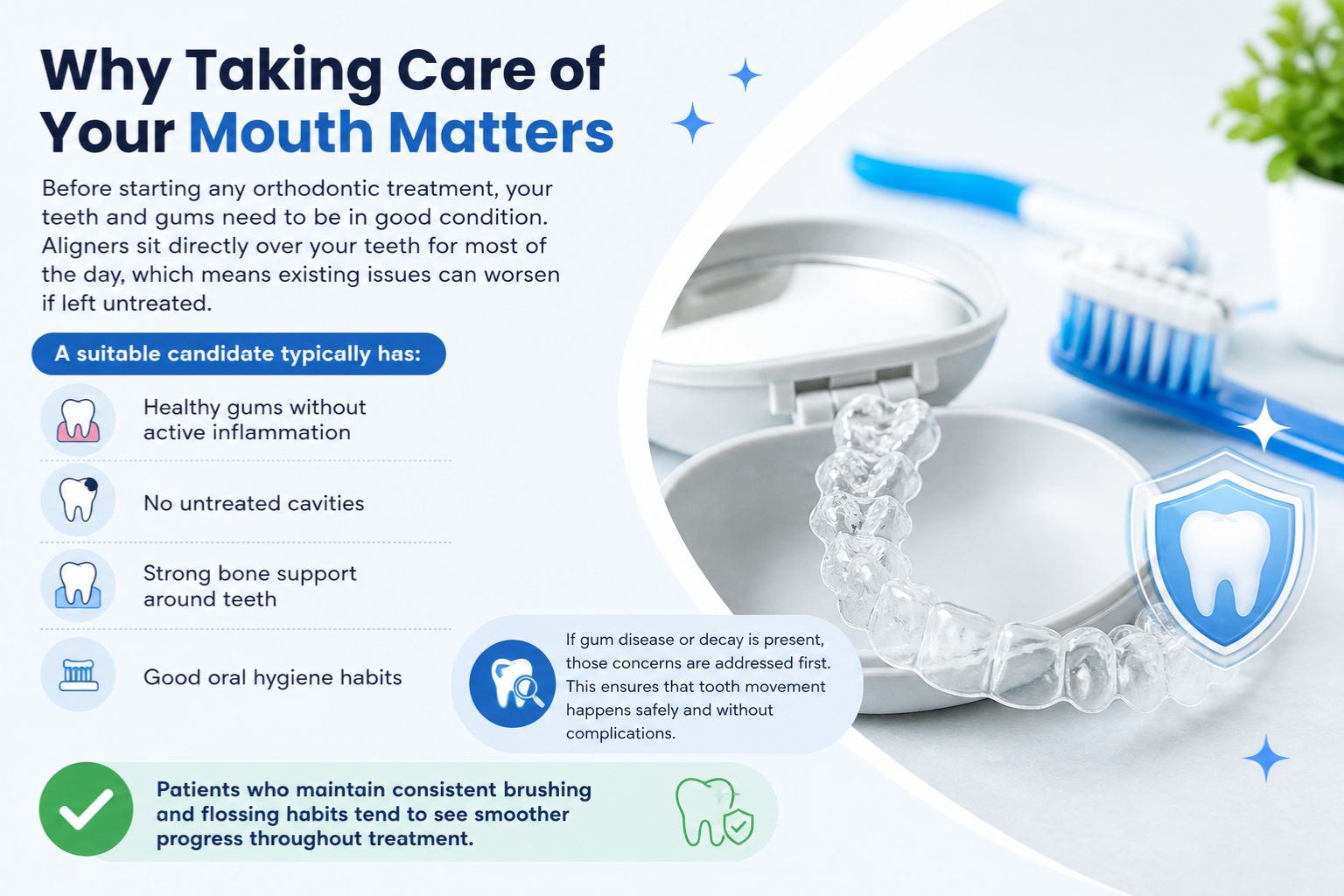
Before starting any orthodontic treatment, your teeth and gums need to be in good condition. Aligners sit directly over your teeth for most of the day, which means existing issues can worsen if left untreated.
A suitable candidate typically has:
- Healthy gums without active inflammation
- No untreated cavities
- Strong bone support around teeth
- Good oral hygiene habits
If gum disease or decay is present, those concerns are addressed first. This ensures that tooth movement happens safely and without complications.
Patients who maintain consistent brushing and flossing habits tend to see smoother progress throughout treatment.
Lifestyle Habits Can Influence Your Results
One of the biggest differences between clear aligners and traditional braces is the level of responsibility. Aligners are removable, which gives you flexibility, but also requires discipline.
You’re likely a suitable fit if you can:
- Wear aligners 20–22 hours daily
- Remove them only for meals and cleaning
- Clean your aligners regularly
- Keep track of trays and switch them on schedule
Busy routines, like commuting through Germantown Avenue, attending classes, or working long shifts, can still accommodate aligners. But consistency matters. Missing wear time can slow progress or affect final results.
This treatment works best for patients who are committed to following instructions carefully.
Age Is Less Important Than You Might Expect
Clear aligners are not restricted to any specific age group. Teens and adults both benefit from this approach when their dental condition supports it.
Adults often choose aligners because they:
- Blend into professional settings
- Allow easier oral hygiene
- Avoid the look of metal brackets
Teens may also qualify, especially when:
- Most permanent teeth have erupted
- They can follow the wear instructions
- Their orthodontic needs are mild to moderate
The orthodontist considers growth patterns, compliance, and dental maturity before recommending treatment.
How Bite Alignment Affects Candidacy
Straight teeth are only part of the goal. A proper bite ensures that your upper and lower teeth work together when you chew and speak.
Aligners can correct:
- Mild overbite or underbite
- Minor crossbite issues
- Slight open bite concerns
However, severe bite discrepancies may require additional orthodontic techniques. In some cases, aligners are combined with attachments or other tools to guide movement more precisely.
A detailed bite analysis helps determine whether aligners alone can achieve the desired outcome.
The Importance of a Digital Treatment Plan
Modern orthodontics relies heavily on digital planning. Before treatment begins, a 3D scan maps out each stage of tooth movement.
This planning phase helps:
- Predict how teeth will shift over time
- Identify potential challenges early
- Customize each aligner tray
- Improve accuracy and efficiency
Patients can often preview their expected results before starting. This clarity helps set realistic expectations and builds confidence in the process.
Signs You Might Not Be an Ideal Candidate
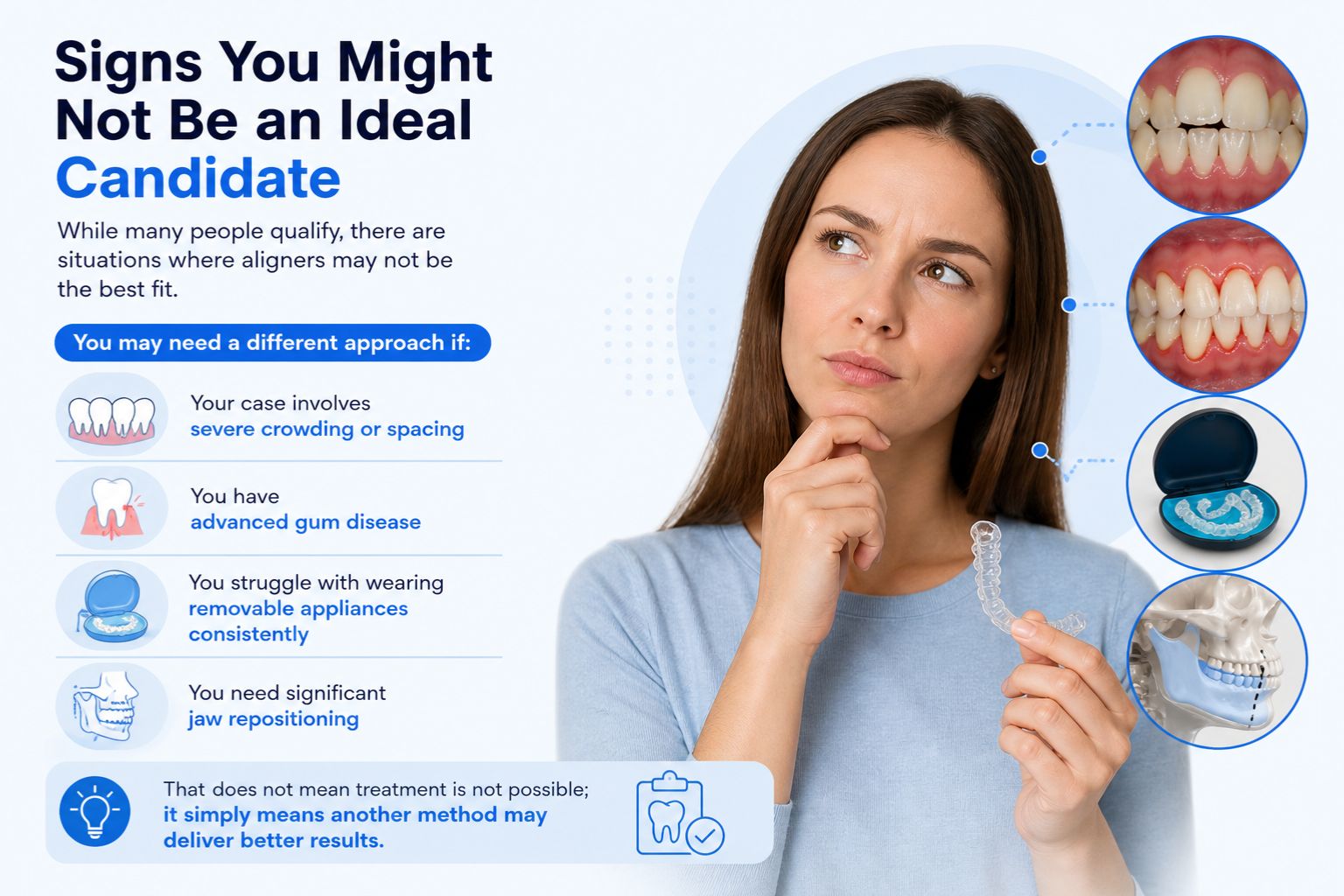
While many people qualify, there are situations where aligners may not be the best fit.
You may need a different approach if:
- Your case involves severe crowding or spacing
- You have advanced gum disease
- You struggle with wearing removable appliances consistently
- You need significant jaw repositioning
That does not mean treatment is not possible; it simply means another method may deliver better results.
How Local Lifestyle Fits into Treatment
Daily routines in and around Erdenheim often involve a mix of work, school, and community life. Whether you are heading to a weekend event in Chestnut Hill or managing a packed weekday schedule, aligners offer flexibility that fits into real life.
You can:
- Remove them for meals at local restaurants
- Maintain oral hygiene during busy days
- Continue social activities without noticeable appliances
This adaptability is one reason many people consider aligners when looking for orthodontic solutions that do not disrupt their routine.
What to Expect During Your Evaluation
Your first consultation focuses on understanding your dental structure and goals. The orthodontist will:
- Examine your teeth and gums
- Take digital scans or impressions
- Evaluate your bite alignment
- Discuss your expectations and timeline
From there, you receive a clear recommendation based on your specific needs. This step ensures that the treatment plan is both realistic and effective.
A Clear Path to a Confident Smile
Choosing orthodontic treatment is a personal decision. It is not just about appearance; it is about function, comfort, and long-term oral health. Knowing whether you are a suitable candidate helps you move forward with clarity.
Ready to Take the Next Step?
A personalized consultation can help you understand if aligners are right for your smile. The team at The Schiff & Moniz Dental Group works closely with an orthodontist to evaluate your needs and guide your treatment plan with precision.
If you have been thinking about improving your smile, this is the right time to get answers tailored to you. A well-planned approach can make all the difference in achieving results that look natural and feel comfortable.
Questions People Ask About Invisalign
- How long does aligner treatment usually take?
Treatment time varies depending on the complexity of your case. Mild alignment issues may take several months, while moderate cases can take longer. Consistent wear and following your orthodontist’s instructions play a major role in staying on schedule and achieving the desired results. - Can I eat normally during treatment?
Yes, aligners are removed before eating, so you can continue enjoying your usual meals. It is important to brush your teeth before placing the aligners back in to prevent food particles from trapping, which can affect both oral health and the clarity of the trays. - Will aligners affect how I speak?
Some patients notice a slight adjustment period when they first begin wearing aligners. This usually resolves within a few days as your tongue adapts. Most people return to normal speech quickly and do not experience long-term changes in how they speak. - How often do I need to change aligners?
Most patients switch to a new set of aligners every one to two weeks, depending on their treatment plan. Each new tray is designed to move teeth slightly closer to the final position, so staying consistent with changes is important for progress. - Are aligners comfortable to wear?
Aligners are made from smooth plastic, which helps reduce irritation compared to traditional braces. Some pressure is expected when switching to a new set, but this is a sign that the teeth are moving as planned and typically fades within a few days. - What happens after treatment is complete?
After your teeth reach their final position, a retainer is usually recommended to maintain results. Teeth can shift over time, so wearing a retainer as directed helps preserve the alignment and protects the effort put into your treatment.